
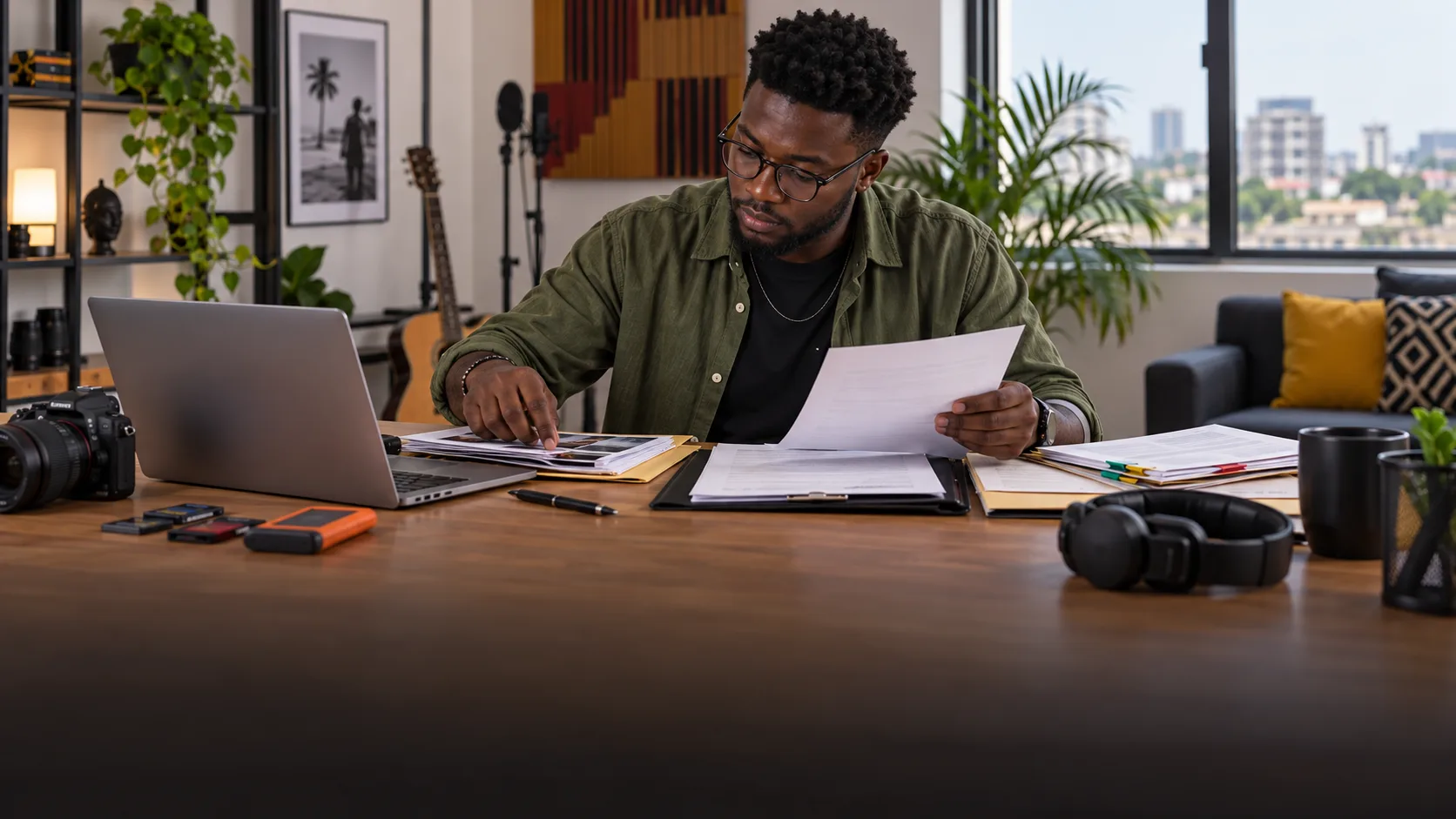
Ghanaian creators need to understand what they made, what material they used, who owns each right and what a contract permits another party to do.
Copyright can arise without a platform watermark or a social post, but registration, licensing, enforcement and cross-border use require careful evidence and professional advice for the specific situation.
Define the decision before choosing tactics
For Ghanaian creators, studios and commissioning organisations, use this working scope: Ghana. Agree the result this work should change, the evidence available now and the constraint that would stop or narrow the plan.
A practical operating sequence
- Keep dated source files, drafts, licences, releases and commission agreements.
- Identify every third-party work, person, location and brand used in a project.
- Agree ownership, permitted uses, territory, term, edits, credit and payment in writing.
- Use clear notices and platform tools where they support the rights position.
- Obtain qualified advice before enforcement, transfer or a high-risk commercial use.
Measure the result, not just the activity
- Works and permissions with complete provenance records.
- Licensing requests, disputes and unauthorised-use incidents.
- Time and cost required to clear rights before delivery.
Guardrails and common failure points
- Credit alone does not create permission to use another person’s work.
- Do not assume platform availability changes ownership.
- This article provides general information, not legal advice.
Put the guidance into practice
Begin with the first step: Keep dated source files, drafts, licences, releases and commission agreements. Review works and permissions with complete provenance records before expanding the work.
For a structured review of the wider operating problem, review GWO SEVO’s Corporate Content and Digital Influence capability or Get an Assessment.