You can start a useful YouTube channel in Ghana with a phone, clear sound and one well-defined idea. The expensive part is rarely the first camera. It is the time required to research, plan, produce and improve consistently.
Begin by deciding whom the channel is for and what they should be able to learn, feel or do after watching. That promise gives you a better foundation than chasing whichever topic is popular this week.
This guide treats a channel as a small publishing operation. It covers the creative work, the audience evidence and the commercial choices without promising instant reach or income.
Choose an audience and a repeatable channel promise
A niche is not only a topic. It is a topic for a particular audience, presented from a recognisable point of view. “Food” is broad. “Practical weekday Ghanaian meals for people cooking in small kitchens” gives the creator clearer decisions about recipes, length, language and equipment.
Write a one-sentence promise:
This channel helps [audience] to [outcome] through [type of videos or perspective].
Then test whether you can list at least twenty useful video ideas without repeating the same answer. Good sources include questions people ask you, problems discussed in relevant communities, search suggestions, comments on related videos and recurring issues in your work.
Decide what makes the Ghana context meaningful
Ghana should shape the content where it improves relevance: local prices and availability, language, climate, institutions, culture, payment methods, infrastructure or the lived experience of the intended viewer. Adding “in Ghana” to a generic script is not localisation.
Be specific about the audience. A video for viewers in Accra choosing their first home internet connection may need different examples from a video for Ghanaian viewers abroad trying to understand a local process.
Create the channel and protect access
YouTube’s official channel-creation instructions explain how to create a personal channel or a channel with another name. If more than one person will help manage the channel, choose an access setup that does not require sharing one password.
Use a channel name that is distinct, easy to say and broad enough for the content you genuinely plan to make. Before committing, check the name across YouTube, search engines and the social platforms you expect to use. Avoid implying an affiliation you do not have.
Turn on two-step verification, keep recovery information current and record who owns the account. For a business or team channel, document what happens when a collaborator leaves.
Complete the basic channel presentation
- Use a clear profile image that remains recognisable at a small size.
- Create a banner that supports the channel promise without filling it with tiny text.
- Write an About description for a person who has never seen the channel.
- Add only links the creator controls and intends to maintain.
- Set a truthful country and audience classification.
Presentation helps a viewer understand the channel, but it cannot rescue a weak video idea. Spend proportionately.
Build a production setup around sound and repeatability
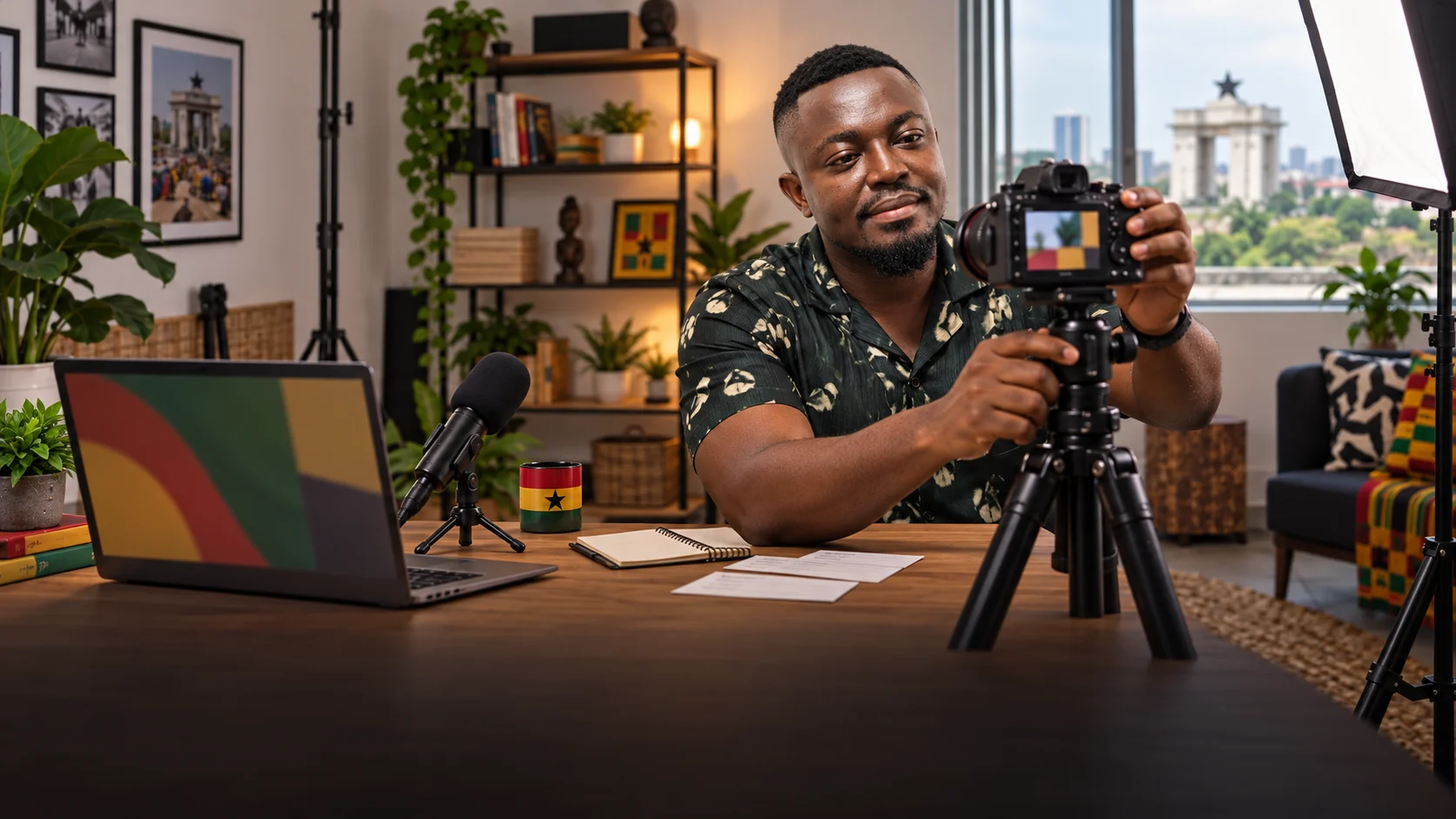
A recent smartphone is enough for many first videos. Stabilise it, clean the lens and place it close enough to the subject to capture a clear image. Face a window for soft daylight or use one controllable light. Avoid a bright window directly behind the presenter unless you know how to expose for it.
Prioritise understandable sound. Record in the quietest available room, move the microphone closer and switch off avoidable noise. A modest wired or wireless lapel microphone can improve a video more than an early camera upgrade, but test compatibility with the phone before a full shoot.
Use a short production checklist
- Confirm the video’s one-sentence viewer promise.
- Write the opening, key sections and closing action.
- Check battery, storage, framing, focus and sound.
- Record a short test and listen through headphones.
- Capture supporting shots while the setup is ready.
- Back up the original files before editing.
- Check names, claims, permissions and sources before upload.
Use music, footage, photographs and graphics only when you have the necessary permission or licence. “Credit to the owner” does not create usage rights. YouTube’s official copyright guidance is the appropriate starting point for platform rules.
Plan videos that earn attention
A useful video makes one promise and delivers it without a long ceremonial introduction. The opening should tell the viewer what they will receive and give them a reason to trust the rest of the video.
For a tutorial, show the result or problem first. For an interview, begin with the decision or tension the conversation will explore. For a story, establish who wants what and what makes it difficult.
A simple outline works for many formats:
- Promise: what the viewer will understand or achieve.
- Context: the minimum background needed.
- Progression: a small number of clear steps, questions or scenes.
- Proof: demonstration, example, source or experience supporting the point.
- Next action: what the viewer should do or watch next.
Edit for clarity. Remove repeated explanations and dead time, but leave enough space for the viewer to follow. Captions and on-screen labels should be accurate, readable and checked after automatic transcription.
Package each video for the right viewer
A title and thumbnail work together to set an expectation. YouTube’s official title and thumbnail guidance recommends accurate, succinct titles and explains how Analytics can be used to review their effect.
Use a searchable title when the viewer is looking for a clear answer: “How to Record Clear Voice Audio on a Phone”. Use an intriguing title when the concept depends on curiosity, but make sure the video delivers exactly what the packaging implies.
A thumbnail should communicate one idea at a small size. Use a strong subject, clear contrast and limited elements. Do not repeat every word of the title. Avoid invented reactions or results that the video does not contain.
Write descriptions for people first
Begin with two or three sentences explaining the video. Add useful sources, chapters and relevant links. Disclose sponsorships or affiliate relationships clearly. A block of repeated keywords is less helpful than a precise description.
YouTube states that search considers relevance, engagement and quality, including how the title, description and video content match a query. Its search-system explanation also makes clear that organic placement is not something a creator can buy.
Publish on a rhythm you can sustain
Consistency means keeping a promise the creator can maintain, not forcing a daily schedule. Start with a small season—perhaps six videos around one audience problem—and prepare more than one episode before publishing the first.
Reuse the research, not the same content. One substantial video can lead to a Short that answers a narrow question, a community post, an email or a follow-up video based on comments. Each format should still make sense on its own.
When the first videos are live, review evidence rather than mood. Which topics attract the intended viewers? Where do people leave? Which videos lead to another view or a meaningful comment?
YouTube’s recommendation-system guidance groups performance signals around appeal, engagement and satisfaction. It also notes that titles, thumbnails and descriptions matter, while tags are mainly useful for common spelling variations. The audience-retention report can show how the opening and later sections held attention.
Treat monetisation as a portfolio, not a finish line
The YouTube Partner Programme is available in Ghana. At the time of writing, YouTube’s full YPP eligibility page stated that advertising-revenue access required 1,000 subscribers plus either 4,000 qualified public watch hours in the previous 12 months or 10 million qualified public Shorts views in the previous 90 days, along with policy and account requirements.
YouTube has also announced higher advertising-entry thresholds starting on 1 February 2027. Platform rules can change, so creators should use the current official YPP eligibility page and the Earn area in YouTube Studio rather than relying on an old article or screenshot.
Advertising is only one possible revenue stream. Depending on the audience and subject, a channel may also support:
- sponsorships with clear disclosure and genuine audience fit;
- affiliate recommendations where the creator has evaluated the product;
- services, training or consulting connected to demonstrated expertise;
- digital or physical products that solve an audience problem;
- licensing or commissioned production;
- memberships or direct audience support where available and appropriate.
Do not accept a partnership merely because it pays. Check the claim, product, contract, usage rights, exclusivity, payment terms and disclosure requirements. Protect the trust that made the commercial opportunity possible.
A practical first six-video plan
- Write the audience and channel promise.
- Choose one recurring problem with at least six useful angles.
- Research the first three videos and prepare simple outlines.
- Record two videos before publishing, using the same basic setup.
- Create accurate titles and distinct thumbnails that set clear expectations.
- Publish on a sustainable schedule and reply to useful questions.
- Review click-through context, audience retention, comments and returning viewers.
- Use the evidence to plan the next three videos rather than changing niche after one result.
GWO SEVO works with organisations that need a clearer content, audience and commercial system rather than isolated publishing activity. Explore the integrated service packages or request an assessment.
Frequently asked questions
What equipment is needed to start a YouTube channel in Ghana?
A capable smartphone, stable support, clear audio, usable light and an editing tool are enough for many first channels. Test the full workflow before buying more equipment. Upgrade the constraint that viewers can actually notice.
Can creators in Ghana join the YouTube Partner Programme?
Yes, Ghana is listed as an available YPP country. Eligibility thresholds and features can change, so confirm the current requirements in YouTube Studio and the official Help Centre.
How often should a new channel publish?
Choose a schedule that allows useful research, acceptable production and consistent delivery. A reliable fortnightly video is stronger than a daily plan that collapses after two weeks.